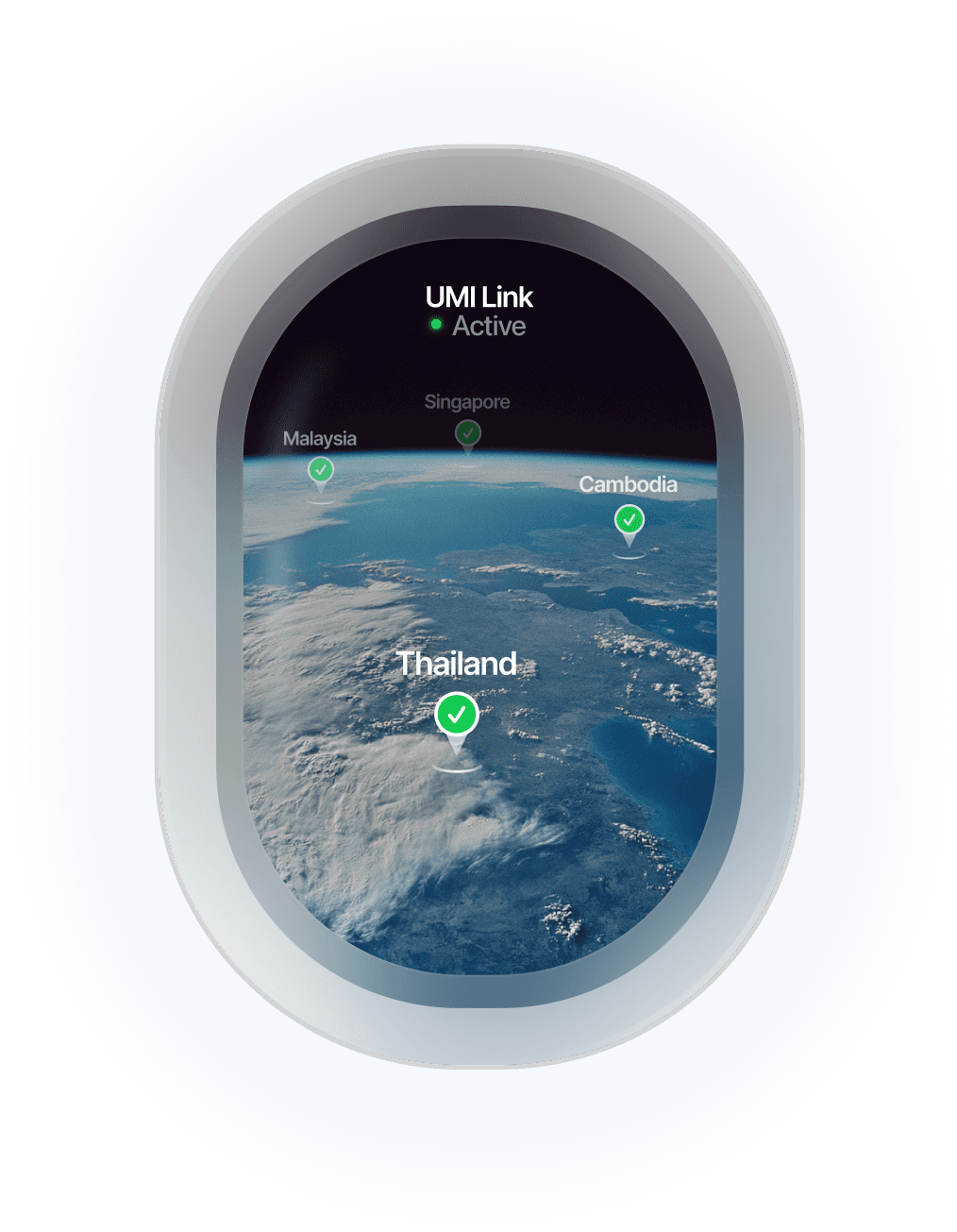
Best Travel eSIM: 200+ Countries, Data That Never Expires
Written By:
Umi

The best travel eSIM is the one that covers every country on your trip, charges a fair rate for the data you actually use, and does not delete your balance the moment you land back home. For most travellers that means one eSIM you install once, top up when you need to, and reuse on the next trip. This guide shows you how to judge that for yourself, then where Umi fits.
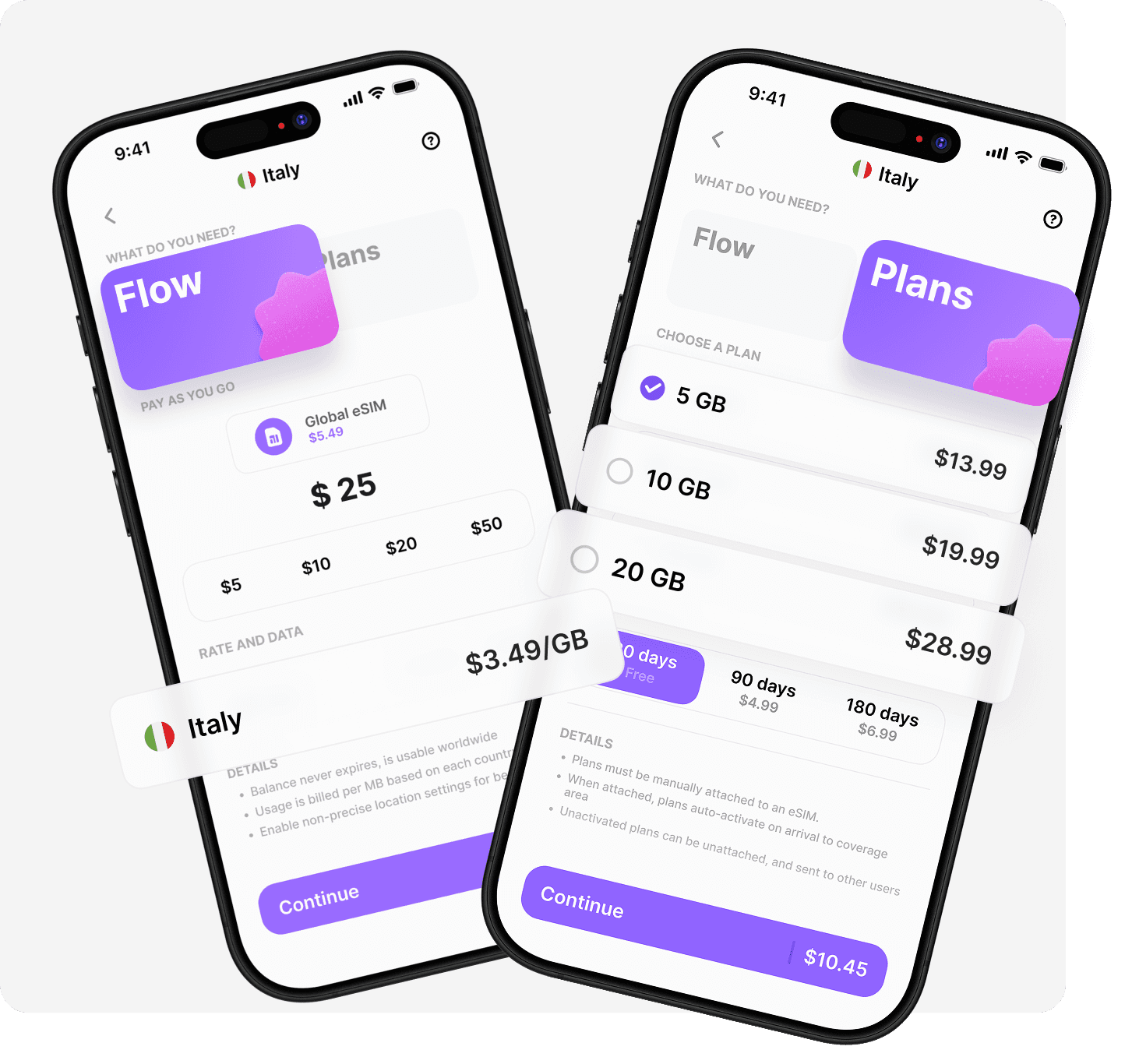
Quick answer: For travellers who cross borders, return often, or do not want to manage a new SIM for every country, Umi is our pick. One Universal eSIM works across 200+ destinations, your pay-as-you-go Flow balance never expires between trips, and hotspot sharing is never throttled. Pay-as-you-go runs from $2.55/GB on the global baseline. It is data-only, so keep your home SIM for calls and texts.
What is the best travel eSIM?
There is no single best travel eSIM for everyone. The best one for you is the provider whose coverage includes your destinations, whose pricing matches how much data you use, and whose plan does not throw away what you have paid for. A frequent, multi-country traveller and a one-week holidaymaker should not buy the same thing.
An eSIM is a digital SIM built into your phone. Instead of posting you a plastic card, a provider sends a profile you download in minutes, so you can be online the moment you land. The travel eSIM market has matured: you can now choose between disposable per-trip plans and persistent eSIMs you install once and keep. That single choice shapes most of the decision below. If you are new to the technology, our guide to what an eSIM is covers the basics first.
How do you choose the best travel eSIM?
Judge a travel eSIM on four things, in order: coverage, price for your usage, features, and trust. Coverage decides whether it works at all. Price for your usage decides whether it is good value for the way you travel. Features decide whether it is convenient. Trust decides whether you will get help when something goes wrong abroad.
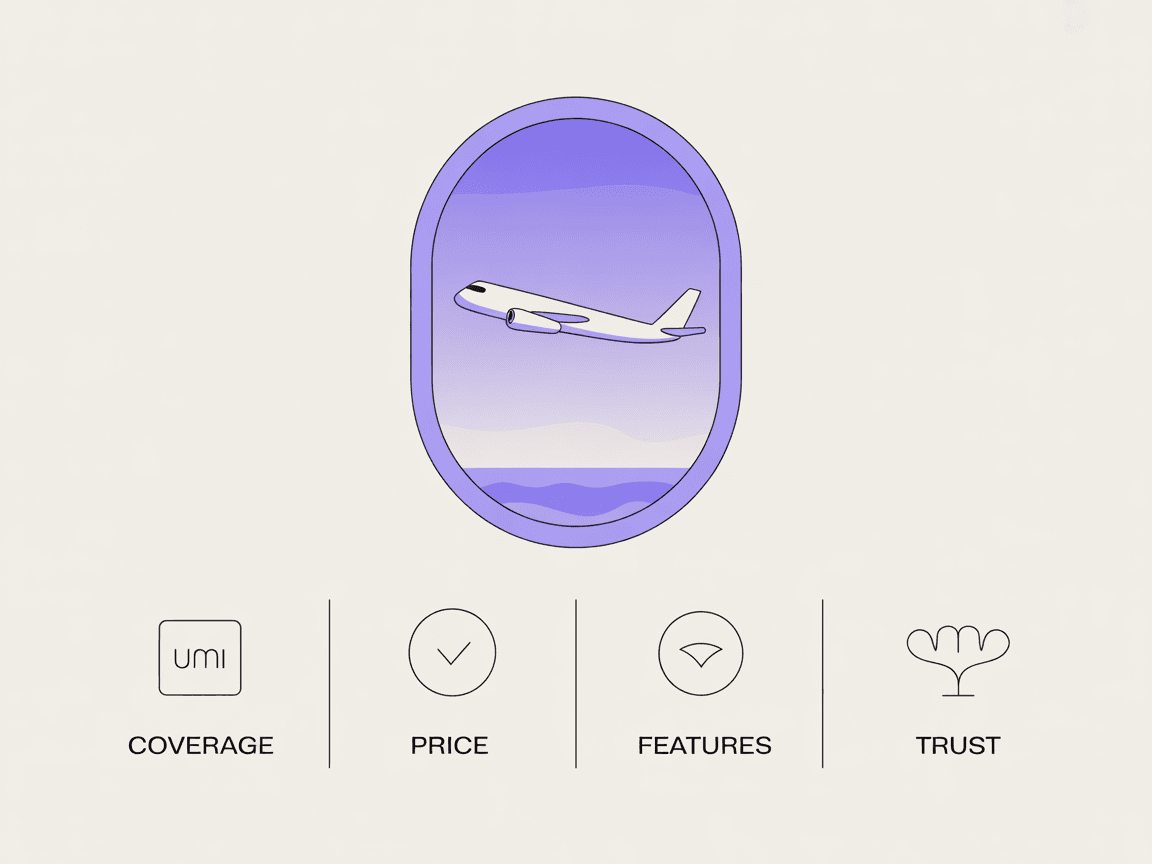
Coverage: does it work everywhere you are going?
Check the provider covers every country on your itinerary, not just the headline destination. A regional plan that stops at a border is no use on a multi-country trip. Providers that span 200+ destinations on one profile suit travellers who hop between countries; single-country plans can be fine if you are staying put.
Price for your usage: not the same as cheapest
The lowest headline price is rarely the lowest real cost. Work out the cost per GB and multiply by the data you realistically use. A pay-as-you-go rate is often cheapest for light, irregular, or multi-country travel because you only pay for what you use and keep the rest. A large fixed bundle can be better value for a single heavy-use trip. Match the plan to the trip rather than chasing a number.
Features: hotspot, top-ups, and expiry
Look for hotspot and tethering so you can share data with a laptop or a travel companion, easy in-app top-ups so you never run dry mid-trip, and a clear answer on what happens to unused data. Persistent eSIMs let you top up and reuse the same profile; disposable ones expire and may need reinstalling for the next trip.
Trust: support, reputation, and reinstating your eSIM
You want responsive support and a provider with a track record, because troubleshooting in a foreign airport is no fun. Check one thing in particular before you ever delete a profile: whether your provider supports reinstalling its eSIM. Many travel eSIMs are one-time install, so deleting them loses them for good. Umi's eSIM can be reinstalled, which makes it safe to manage on the move.
Which destinations does it need to cover?
It needs to cover everywhere on your trip on a single profile, ideally without buying a separate plan per country. This is where a global eSIM earns its place: one install that follows you across borders beats a drawer full of per-country bundles. If you only ever visit one country, a local plan is fine, but most travellers cross at least one border.
One Umi Universal eSIM works across 200+ destinations, so a London to Tokyo to Bangkok trip runs on the same profile with no QR swapping at each stop. If you want to compare worldwide options first, our guide to the best global eSIM options breaks down how single-region, regional, and global plans differ, and the global eSIM provider roundup covers who serves which regions.

How much should a travel eSIM cost?
A fair travel eSIM costs roughly $2 to $7 per GB on pay-as-you-go, with fixed bundles dropping the per-GB rate in exchange for committing up front. There is no single right price, because value depends on usage. The honest test is cost per GB multiplied by your real consumption, not the cheapest plan on a banner.
Umi's pay-as-you-go Flow runs from $2.55/GB on the global baseline, with country rates varying by destination: the USA and UK are $2.55/GB, and Japan is $2.95/GB. Fixed Plans are cheaper per GB than Flow when you know roughly how much you will use. A light or irregular traveller often pays less overall with pay-as-you-go because nothing is wasted; a single heavy-use trip can be cheaper on a large bundle. For the mechanics of paying as you go, see our guide to the best pay as you go eSIM options, and for keeping a balance running mid-trip, the data top up walkthrough.
One caution on "cheap": a low day-rate that deletes your data after five days is not cheap if you only used half of it. Factor in expiry before you decide.
Does travel eSIM data expire, and does that matter?
With most travel eSIMs, yes: data is tied to a plan that expires after a set number of days, and anything unused is gone. It matters more than people expect, because it quietly raises your real cost per GB and punishes anyone whose plans change. A persistent balance avoids the problem entirely.

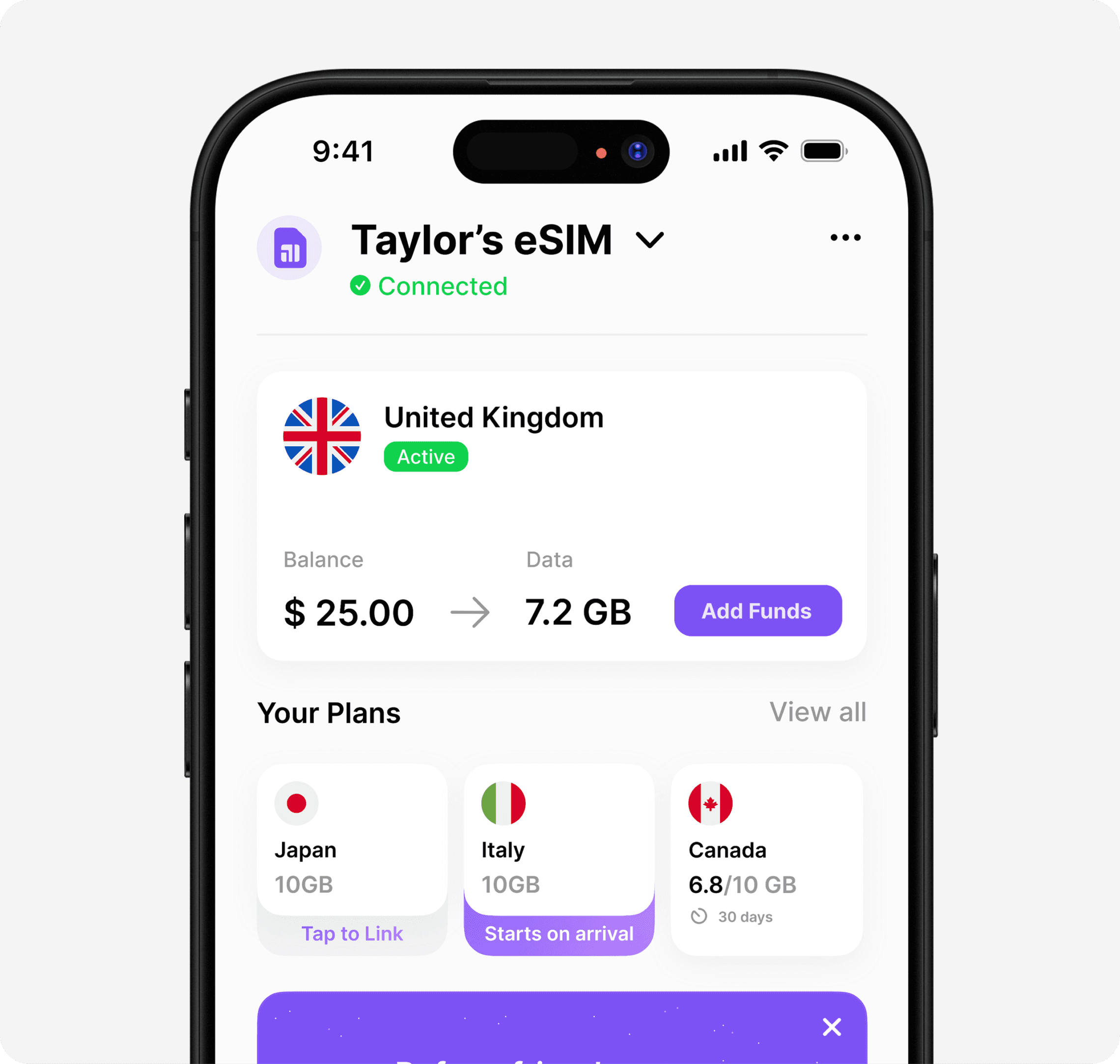
This is Umi's core difference. Your Flow balance never expires and carries between trips, so data you buy for a week in Spain is still there for a weekend in Italy three months later. Nothing is lost when a trip ends. For the full picture of what "never expires" means and what it costs per GB, read our guide to eSIM data that never expires. If you travel a few times a year, that persistence often beats a slightly lower headline rate that comes with a five-day clock. Our piece on the best data eSIM for travellers goes deeper on matching data allowances to trip length.
Do travel eSIMs include hotspot and tethering?
Some do and some do not, and the detail matters. Many providers allow hotspot but cap it, or exclude it from their cheapest and their "unlimited" plans. If you tether a laptop or share with a travel companion, confirm hotspot is included and not throttled before you buy, because it is one of the most common things buried in the small print.
Umi includes unlimited hotspot, never throttled. To be precise about what "unlimited" means here: there is no separate tethering cap, but tethered data still draws from your Flow balance like any other data. That is different from a competitor "unlimited data" plan. No provider offers a truly uncapped unlimited plan. Saily's unlimited plans, for example, give you 5GB of full-speed data a day and then slow to 1Mbps or less, and Holafly caps how much of its unlimited data you can share by hotspot (1GB a day on its Spain plan). Umi does not sell an unlimited data plan at all, and we would not claim one. If you genuinely need to tether heavily, check the fair-use cap, not the word "unlimited".
Is a travel eSIM a good idea?
For most travellers, yes. A travel eSIM gets you online within minutes of landing, avoids the roaming charges your home carrier would bill, and removes the airport queue for a local SIM. The main conditions are a compatible, unlocked phone and a destination that permits eSIMs. For nearly everyone with a recent handset, it is the simplest way to stay connected abroad.
It is not for absolutely everyone. If your phone is older than an iPhone XR or a 2020-era Android, it may not support eSIM, so check first with our guide to eSIM supported phones. A handful of countries restrict or ban eSIM use, so confirm local rules before you rely on one. And because most travel eSIMs are data-only, keep your home SIM active if you need traditional calls and texts. For the wider case for switching, our overview of why people choose the best eSIM for international travel is a useful companion read.
Is Holafly or Airalo better, and how do the main providers compare?
Neither is universally better; they suit different travellers. Airalo is an eSIM store with a wide range of per-country and regional bundles that expire after their term. Holafly sells unlimited-data plans priced by the day, with capped hotspot sharing, aimed at heavy users. The honest comparison is not which brand wins, but which model fits your trip: bundles that expire, day-rate unlimited that throttles, or a persistent balance you reuse. For live 2026 prices and the daily caps side by side, see our Airalo vs Holafly comparison, and what unlimited eSIM data really means for the daily caps behind every unlimited plan.
The table below sets Umi against three named alternatives on the four things that actually decide value: price, coverage, expiry, and hotspot. Umi's figures come from Umi's live pricing. Competitor figures come from each provider's own website in September 2026 and change often, so check them before you buy.
Provider | Price model | Coverage | Data expiry | Hotspot / tethering |
|---|---|---|---|---|
Umi | Pay-as-you-go Flow from $2.55/GB (USA, UK and Europe); fixed Plans cheaper per GB | One Universal eSIM across 200+ destinations | Never expires; balance carries between trips | Unlimited hotspot, never throttled (draws from your balance; no separate tether cap) |
Airalo | Per-country, regional and global bundles, from $4 (for example the USA or Japan) | 200+ locations, with a bundle per country or region, or a global plan | Each bundle expires at the end of its validity period; a deleted eSIM can't always be recovered | Allowed where the phone and network support it |
Holafly | Unlimited-data trip plans priced by the day (Spain: $11.90 for 3 days, $23.90 for 7), or a monthly plan from $49.90 | 200+ destinations on trip plans; 160 on monthly plans | Trip plans end after the days you buy | Hotspot sharing capped (1GB a day on the Spain plan); operators may slow speeds after heavy use |
Saily | Fixed-data plans (Europe from $4.99 for 1GB over 7 days), plus an unlimited Ultra plan; includes ad and malicious-site blocking | 200+ destinations | Each plan expires at the end of its validity period | Hotspot allowed; unlimited plans give 5GB of full-speed data a day, then 1Mbps or less |
Read the table by your travel style. If you cross borders or travel several times a year, a persistent balance and one-eSIM coverage tend to win. If you want one heavy week of data and nothing afterwards, a day-rate unlimited plan can suit, as long as you accept the throttle and the expiry. For a fuller field, our roundup of the best global eSIM options compares more providers side by side.
What is the best eSIM for the USA, Europe and other top destinations?
The best eSIM for a specific destination is one with strong local network partners there and a rate that suits how long you are staying. Coverage quality varies by country, so the right answer for the USA is not automatically the right answer for Japan or Turkey. The advantage of a global eSIM is that one profile covers all of them, with the local rate applied per destination.
Umi applies a per-country rate on the same Universal eSIM, so you do not buy a new plan at each border. Browse the live destination pages for current local rates and coverage detail:
For the trip-level detail, how much data each destination really needs, live prices for country Plans against pay-as-you-go, and the local rules worth knowing, read the destination guides: best eSIM for Europe, best eSIM for Japan, best eSIM for Thailand, best eSIM for Turkey, best eSIM for Morocco and best eSIM for Mexico.
If you want the verdict on the strongest networks behind these plans, our guide to the best network in the world explains how Umi selects local partners in each region.
What is the best eSIM app for international travel?
The best eSIM app lets you buy, install, top up, and track usage in one place, with activation in under a minute and a clear view of your balance. App quality is a real differentiator, because everything you do with a travel eSIM happens through it: there is no shop, no card, and no desk. A confusing app turns a quick top-up into a problem at the worst moment.
Umi handles the whole journey in-app, with setup in under 60 seconds and an instant connectivity flow that gets you online as you land. We have compared interfaces in detail in our roundup of the best eSIM apps, and the instant top up guide shows how a balance refill works mid-trip. For the basics of how a digital SIM works at all, the consumer guide What is an eSim? from MoneySavingExpert is a clear, independent primer.
How do you set up a travel eSIM?
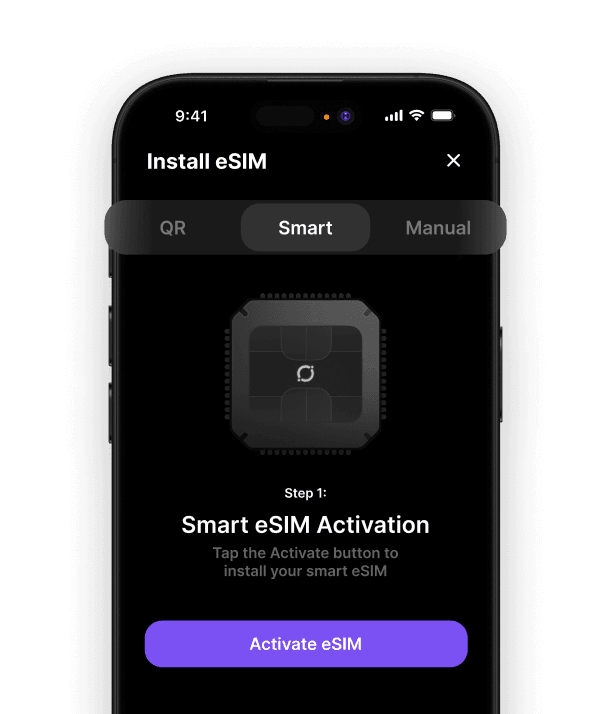
Setup takes a few minutes and is best done on home Wi-Fi before you fly. Confirm your phone supports eSIM and is unlocked, buy your plan, install the profile, and switch it on as your data line with data roaming enabled so it can use partner networks abroad. Test it before departure so you land already connected.
Check your device. Confirm your phone supports eSIM (iPhone XR or newer, recent Samsung, Google Pixel, and many tablets) and is carrier-unlocked.
Buy and install. Choose your plan in the app and follow the prompts. With Umi the profile installs in under 60 seconds; some providers issue a QR code to scan in your settings instead.
Switch it on. Set the eSIM as your data line and turn on data roaming for that line so it connects to local partner networks abroad.
Test before you fly. Open a browser on home Wi-Fi to confirm you are online, then keep your physical SIM for calls and texts if you want a dual-SIM setup.
For a fuller walkthrough with screenshots, including the iPhone and Android paths, see the Umi setup guides. One safety note that applies to every provider: only delete an eSIM if you have confirmed it can be reinstalled, because many travel eSIMs are one-time install and deleting them loses them permanently. Umi's eSIM can be reinstalled.
Best travel eSIM: frequently asked questions
Can I keep my own phone number while using a travel eSIM?
Yes. Most travel eSIMs are data-only, so you keep your home SIM active for calls and texts and use the eSIM for data. This dual-SIM setup keeps you reachable on your usual number while you browse, navigate, and message over apps on affordable local data.
Which phones work with a travel eSIM?
Most flagship phones from the last few years support eSIM, including iPhone XR and newer, Samsung Galaxy S20 and up, and recent Google Pixel models, plus many iPads. Older or carrier-locked handsets may not. Check the full list in our guide to eSIM supported phones before you buy.
What happens when I run out of data?
You top up. With a persistent eSIM such as Umi, the profile stays installed and you add to your balance in the app, so there is no reinstalling and no gap in service. With disposable plans you usually buy a fresh plan or, in some cases, a new profile. See the eSIM top up guide for the steps.
Are travel eSIMs available everywhere?
Almost everywhere, but not quite. A small number of countries restrict or ban eSIM use, so check local rules for your destination before you depend on one. Where eSIMs are blocked, a local SIM on arrival or your home carrier's roaming plan works as a backup.
Is a travel eSIM cheaper than roaming?
Usually, yes, often dramatically so, because you pay local-style data rates instead of your home carrier's roaming charges. The exact saving depends on your carrier and destination, but avoiding roaming is one of the main reasons travellers switch to an eSIM in the first place.
Can I share a travel eSIM with my team?
For organisations, Umi Business puts a team on one shared pay-as-you-go balance with admin controls, from $19.95 per eSIM per year. Wider data sharing through Groups is coming soon. Business and Groups are built for teams and organisations, not for families. Our guide to the eSIM for business explains how the shared balance works, or you can explore Umi Business directly.
Choosing the best travel eSIM comes down to matching coverage, price for your usage, features, and trust to the way you actually travel. If you cross borders, return often, or simply do not want to manage a new SIM for every country, one eSIM you install once and a balance that never expires take most of the friction out of staying connected. Install your Universal eSIM and try it on your next trip.












" height="15.96587083656648px" id="gUt8q3MIs" width="13.557999603271485px"/></svg>)